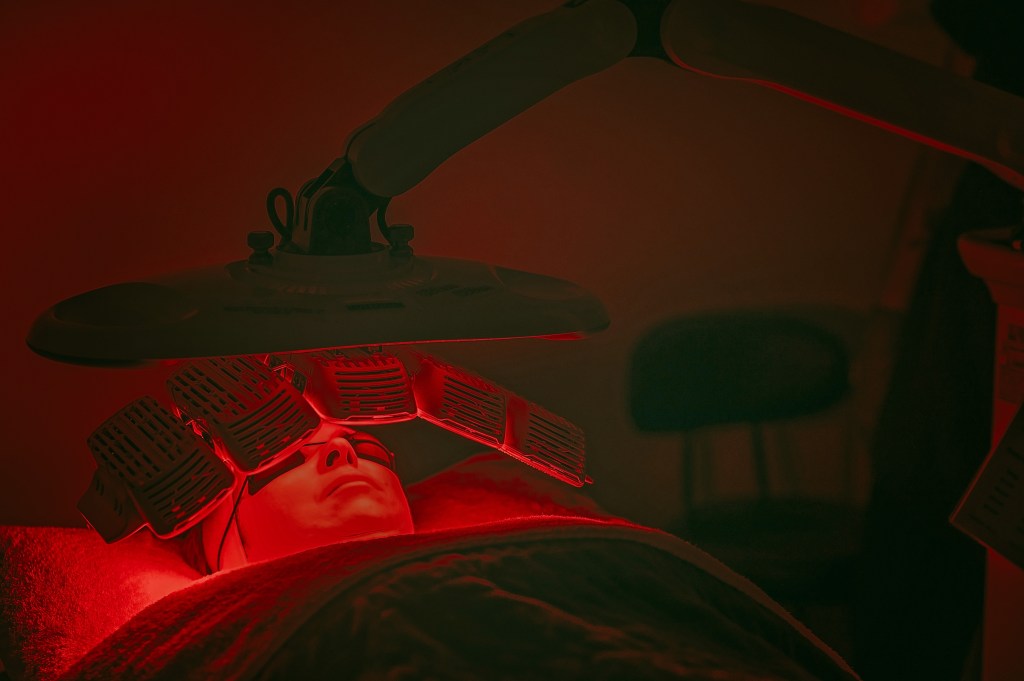
Photodynamic therapy, or better known as PDT, is a form of non surgical treatment for skin cancer. PDT uses a red light commonly found in UV, and a chemical that is absorbed by the cancerous skin that reacts to the red light, causing its destruction. The types of skin cancers it can normally treat are actinic keratoses (commonly known as sun spots, which are actually pre-cancerous), superficial Squamous Cell Cancers, and superficial Basal Cell Cancers.
There are 2 ways PDT can be used. There is daylight PDT, which is better suited to treat a larger surface areas like the whole face, and red-light PDT, which is better suited to treating smaller surface areas.
Daylight PDT is used mainly for the treatment of actinic keratoses. This involves a short half an hour appointment at the clinic, where your face is prepared using a light dermabrasion, and cleanse, followed by the application of the cream. Sunscreen is then applied over all other sun exposed areas. You are then advised to sit in the early morning sun for 2 to 3 hours. The cream is then washed off after. You do have to avoid the sun for 3 days after the treatment as the cream remains sensitive to the sun during that time. The procedure is usually well tolerated and patients generally not require any pain medications.
Red light PDT is used for the treatment of small to medium sized superficial Squamous Cell Cancers, and superficial Basal Cell Cancers. With this treatment, you are asked to present to the clinic, where the cream is applied to the area, which is then covered from the sun. You are allowed to leave the clinic as long as you keep the area away from the sun. You are asked to re-present to the clinic after 4 to 6 hours. The skin cancer is then targeted with the red light under a machine for 8 minutes. This is done 1 to 2 weeks apart. Most people do experience a slight discomfort during the process, and we advise taking some Paracetamol prior to the procedure.
You will be sent home with a care pack after the procedure with a 1 month review.
 Dr Cheryl Choong